
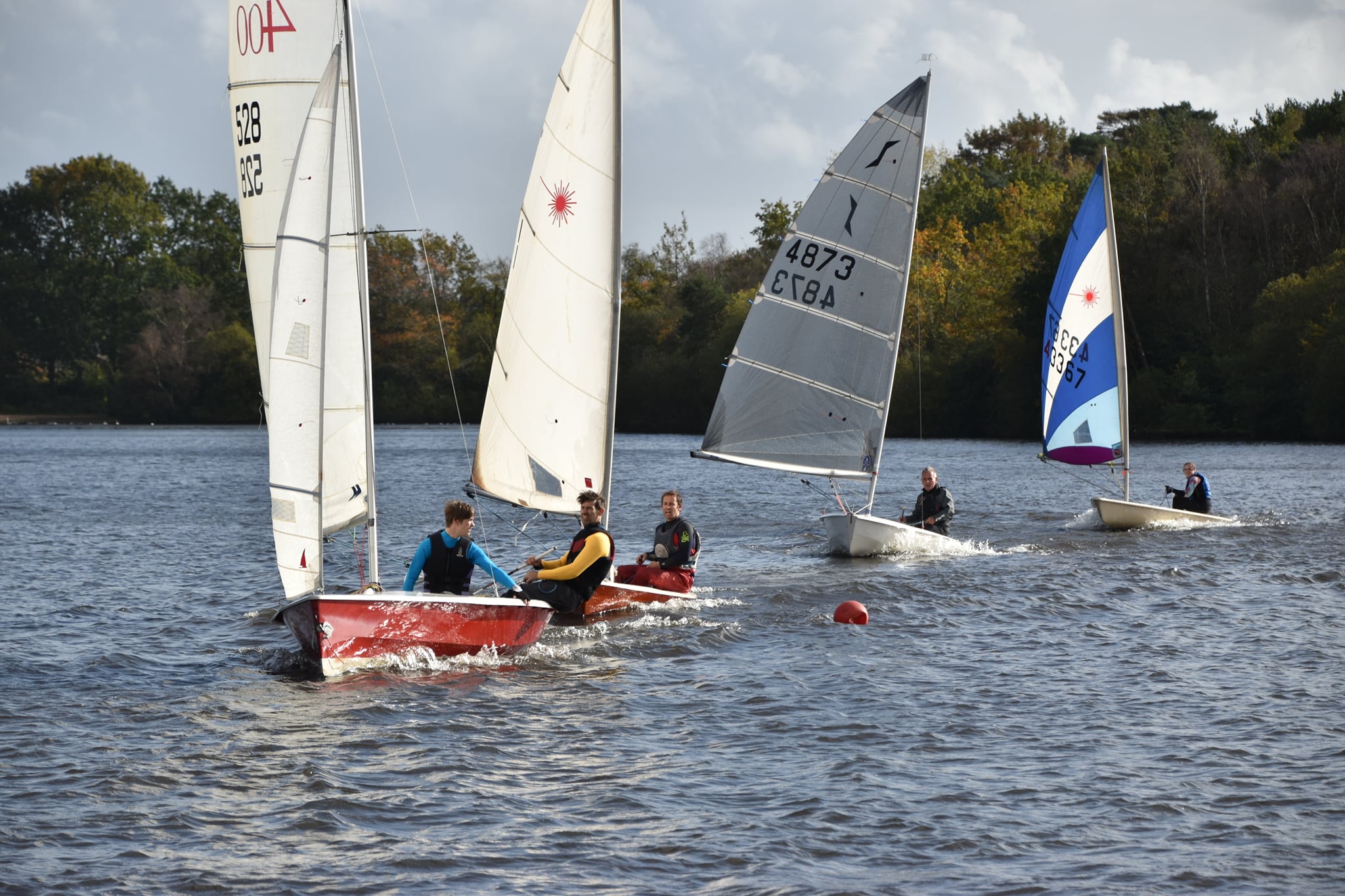


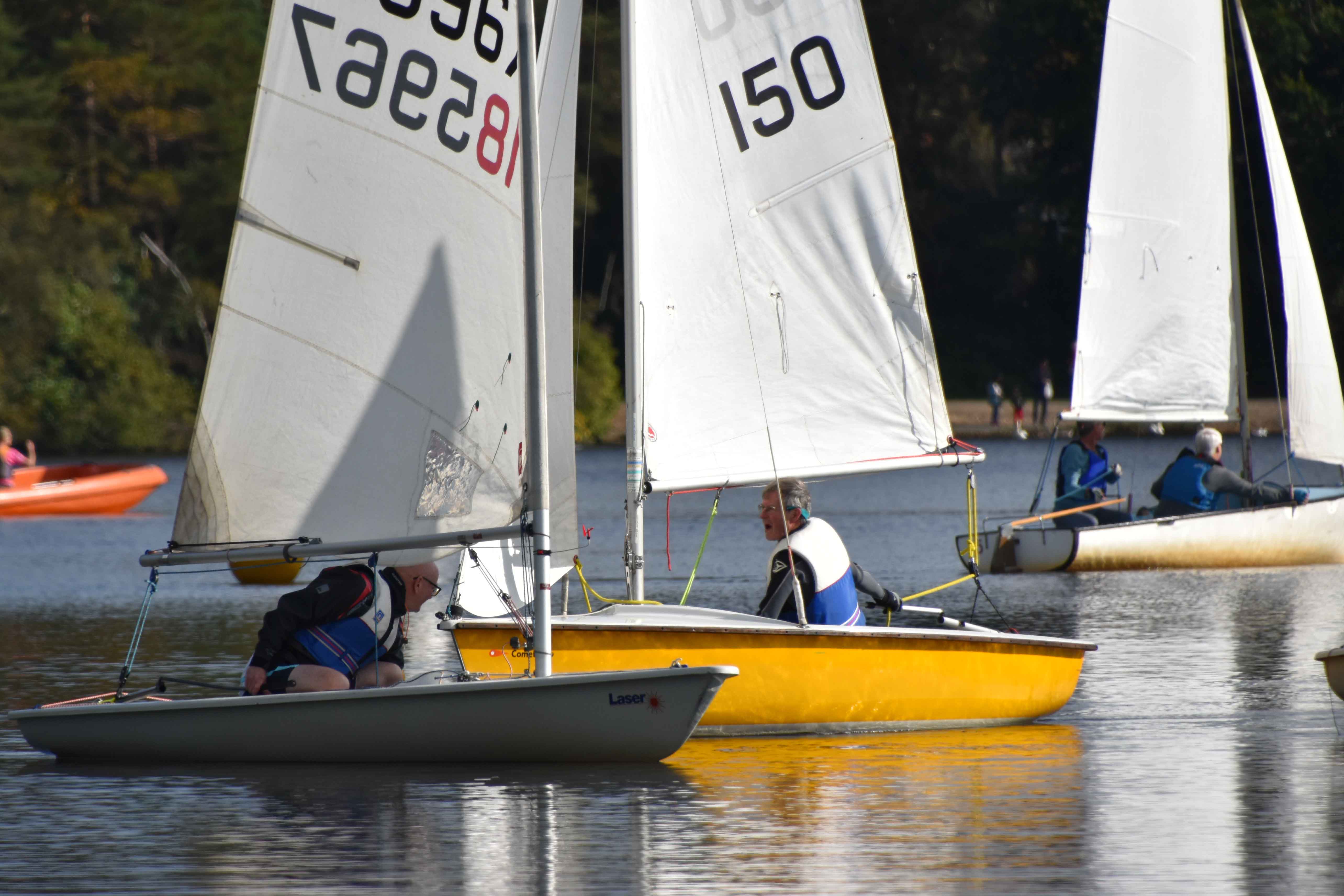
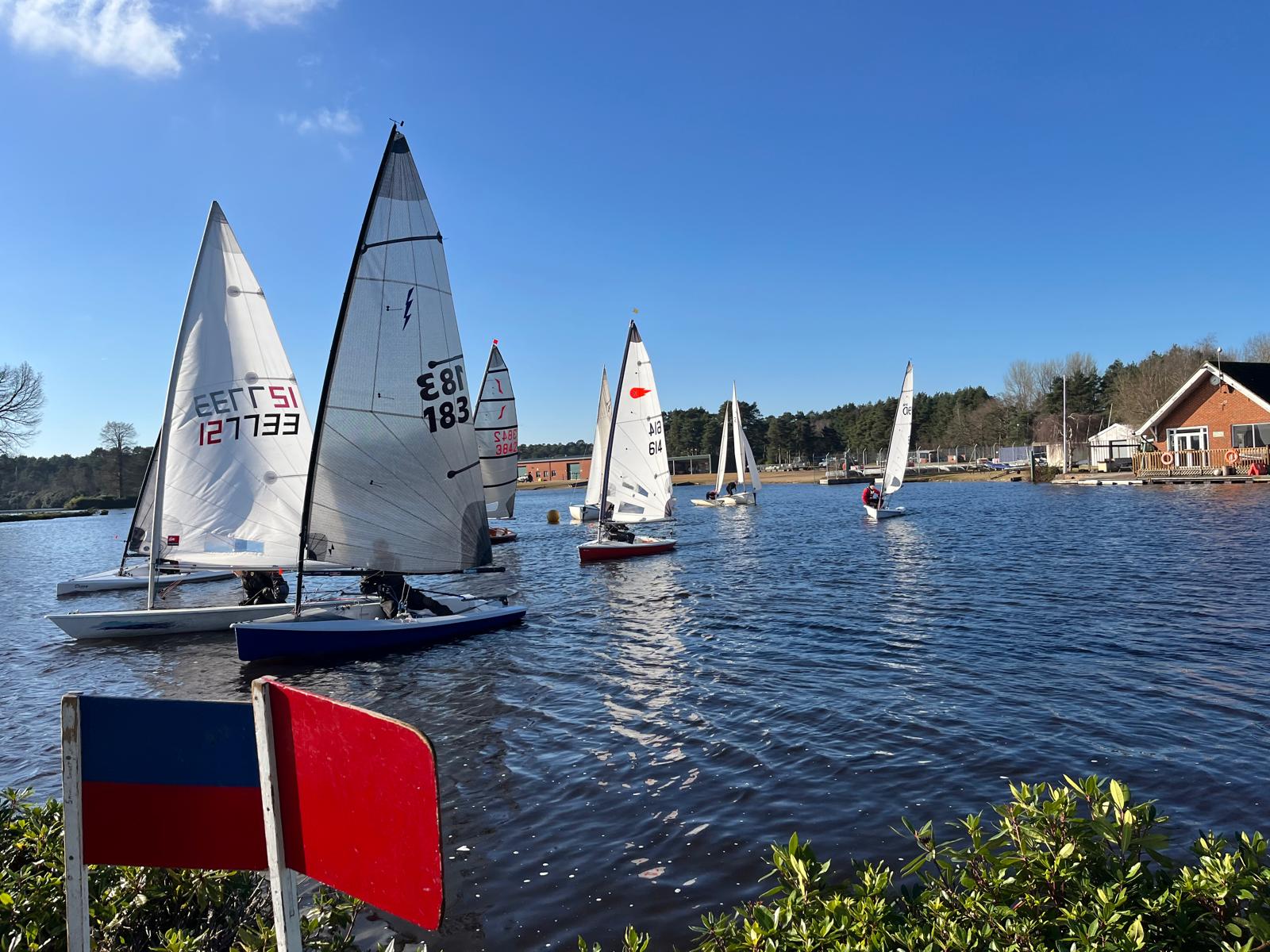
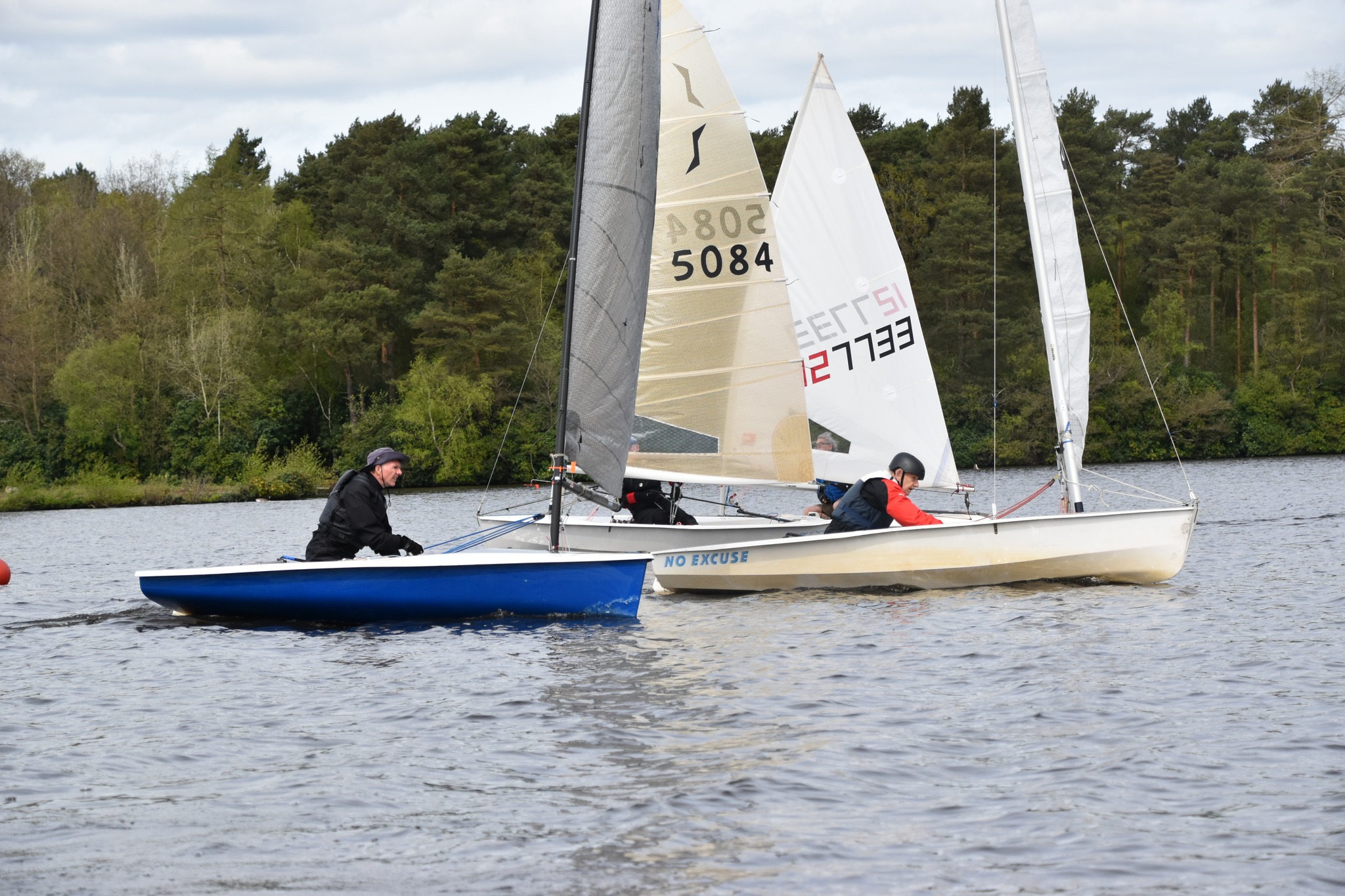
Pursuit principles
First, to recap the difference between a handicap and a pursuit race. In a handicap, we start all boats at the same time, let them sail for the same distance, and record their finishing time. Then we correct each boat's finishing time to deal with differences in their rated speed. With a pursuit race, we apply all the handicap allowance at the start, by starting classes at different times according to their rated performance. Slower boats start before faster ones.
The Race Officer handbook contains Pursuit Schedules, for different nominal durations. You can select a longer or a shorter one, according to the conditions of the day. Each sheet gives a succession of starting times for different classes. They're calculated so that, when you give the finishing signal at the indicated time, all classes "should" have had enough time to cover the same distance, so by then, they "should" have arrived at the same point on the course, apart from the usual effects of wind variations and sheer luck. But in practice, of course, the more skilful sailors will have sailed beyond this meeting point, whilst others will have fallen short. The winner is the one that has covered the greatest distance, as indicated by position relative to other boats.
So if, at the finish, boat A is ahead of boat B (after taking account of the numbers of laps each one has sailed), then boat A has beaten boat B, and so on for all the others. There is no more calculation or correction to be done.
The pursuit course
You use exactly the same ideas in setting the pursuit course as you would for a handicap, and if you've already had a handicap race, you can usually use the same course. But if you only have a few boats - say up to three - going off at any one start time, it is not so critical to have an upwind start, and you may choose to run the start near the clubhouse on a different point of sail. (But NOT a dead run; consider going around the other way!) There is NO finish line for a pursuit race.
The Pursuit Schedules
So you need to have a list of start times for all the boats that will be racing. You'll find this in the Race Officer Handbook, and it's called the Pursuit Schedule tables. THIS shows you what they look like. You have a choice of durations, from which you can select according to the conditions of the day.
Each schedule follows the same pattern. As you read down the left-hand columns, you see a succession of possible start groups, starting with the slowest boats and running down to the fastest. The first column shows groups of PNs that will have the same start time; the second lists the classes that come within that group, and the third gives the length of the sailing time for the group. Each of the remaining columns spells out an actual starting sequence to be followed; you choose which column, according to the slowest class taking part.
To take an example, suppose the boat classes racing range from a Bosun (slowest) to an RS300 (fastest).
You look down column 2 until you come to the Bosun. It is shown on a coloured background, and you trace to the right, along the horizontal stripe of that colour until you reach a vertical column of the same colour. You'll find there's a zero at that point, and it's at the top of the column of timings you will be using. So you will start your slowest class when the watch shows zero, and all the other classes at the number of minutes shown, after the first start.
It's important to make a note of the start times you need, covering all the classes you have to cater for (read across from the Classes column to find each one in the timing column). And its essential to note the finish time too: you'll find it at the bottom of the timing column. You'll be using the note you made, both for the briefing, and for the start itself.
Complications
If you're very unlucky, the slowest class may not be on a coloured stripe. (There isn't enough room on an A4 page to include a column for every possible class). In this case, the simplest approach is to select the nearest coloured stripe above, and have a dummy start for that class. As an alternative, you could still use the column for that (dummy) class, but take an appropriate amount off every timing. (Error-prone).
You may find that a boat comes along that we haven't listed in the Class column. But, as long as you have a PN for it, you can use the left-most column to find the right start for it. (Except if it falls into one of the gaps in the range column: in that case you will have to improvise.)
The pursuit briefing
In the actual briefing, you describe the course in the same way as for a handicap race, and then you make sure that all competitors know the start time that applies to them. You should also remind everyone that, at the finishing time, they need to keep track of their position relative to boats near them.
The pursuit start sequence
You set the official watch in the usual way, for a 5-4-1-0 start, and run through the normal start sequence of flags and signals. When the watch reaches zero, you start the first class with the usual flag and sound signals. From then on, you follow the note you made, and for each of the remaining classes, as its time comes up, you give a single sound signal, with no flag signal. But it will be helpful to the sailors if you make an announcement (like "one minute to the Laser start") at an appropriate time after the start of each class, to give reasonable warning for the following class, and again ("Laser start") at their actual start time. Each boat should already be aware of its proper start time, but some may have been out of range when you gave the initial start signal, and thus be needing a bit of help.
Recording pursuit progress
If there's a wide spread of start times, you may find you have slow boats coming around again through the start line before you've started the fastest boats, and you need to keep track of this and record it in the usual way. Once you have got everybody started, you carry on keeping track of progress, paying particular attention to which lap each boat is on, to allow for the staggered start.
The pursuit finish
Keep an eye on the time as the race goes on. It's important to finish the race at exactly the right time, or the positions will be meaningless. Sound the hooter (one long sound) when the watch reaches the figure you read off the bottom of the column. Everybody has now finished, and you write down the finishing order (who has sailed the furthest), except . . .
Occasionally you won't be able to see which of two boats is ahead; in this case you can only ask the sailors themselves, or others close by, if there are any. There may also be occasions when even the sailors themselves don't know - if, for instance they are on different tacks on a beat. In this case they have to sail on until they next come together, or to the next mark, when the position will be clarified.
The pursuit result
Once you've got the tricky cases sorted out, you write down the finishing order on the score sheet, and that's the official result. There's no further correction or calculation.